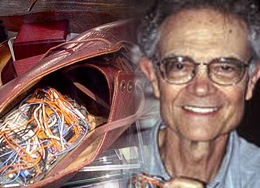
 An engineer in semi-conductor integrated circuits, Keith Taft first discovered blackjack in Reno, Nevada in 1969 and, having read several strategy books, embarked on a career as a card counter. Having experienced only limited success, he set about building a computing device, which he could wear on his person, to count cards for him. He trialled his initial, bulky prototype, which weighed in at 15lb, in Reno in 1972 but, after an initial run of success, lost his entire bankroll and gave up playing blackjack for a while.
Following the invention of the microchip, in 1976 Taft revisited the idea and created a smaller, slimline machine, built in a pocket calculator, which was easier to conceal. He was subsequently introduced to blackjack ‘guru’ Ken Uston and, together, they formed a professional blackjack team. In April, 1977, the team doubled its $50,000 bankroll with ten days but, having experienced some ‘heat’ in Las Vegas, subsequently relocated to Harvey’s Lake Tahoe, where a frightening experience with security staff caused the team to disband.
Nevertheless, Taft soon returned to blackjack, creating increasingly sophisticated, pioneering solutions, including shuffle tracking, networking and digital photography, until his team – which included his brother Ted and son Marty – were arrested and imprisoned after being caught at the Marina, now part of the MGM Grand, in Las Vegas in 1985. Hailed as a pioneer, Taft was inducted into the Blackjack Hall of Fame in 2004.
 Justin Bonomo, known online as ‘ZeeJustin’, has the distinction of being the highest earning poker player, in terms of live tournament play, in history. At the last count, Bonomo had amassed $45 million in total live earnings, approximately $3.1 million ahead of his nearest rival, Daniel Negreanu. He owes his position in the all-time money list, in large part, to the $10 million he collected for winning the World Series of Poker (WSOP) The Big One for One Drop at the Rio All-Suite Hotel & Casino, Las Vegas in July, 2018. However, the previous month he had already won his second WSOP bracelet in the Heads Up Championship at the same venue and, in the year as a whole, won nine tournaments and earned over $25 million.
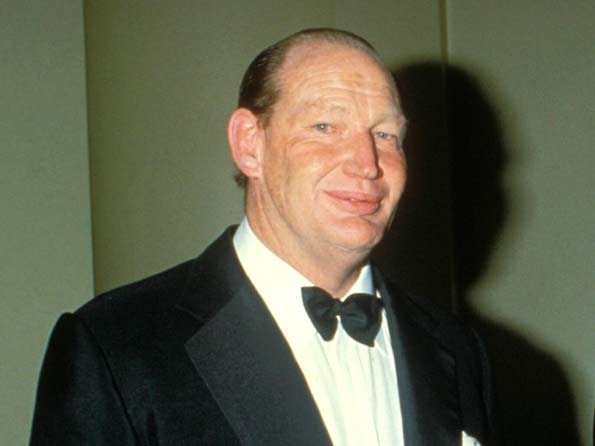 The late Kerry Packer was an Australian media tycoon, probably best remembered as the man responsible for World Series Cricket – or the ‘Packer Circus’, as it was dubbed by its detractors – in the late Seventies, which changed the face of cricket forever. However, Packer was also an inveterate, but highly accomplished, gambler and regularly hit the headlines with titanic wins and losses.
 Ida Summers, christened the ‘Vegas Vixen’, was a flagrant, but nonetheless successful, blackjack cheat, who reputedly won tens of thousands of dollars, by illicit means, from casinos on the Las Vegas Strip from the early Sixties onwards. Believed to have started out in Newport, Kentucky – the original ‘Sin City’ – Summers moved to Vegas following the passing of the Federal Wire Act and other legislation supported by Attorney General Robert F. Kennedy, in 1961, which sounded the death knell for illegal gambling in casinos and bust-out joints in Newport.
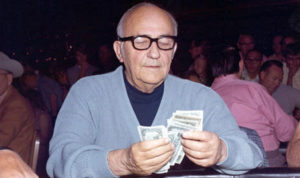 The late Johnny Moss, who became known as the ‘Grand Old Man of Poker’, had the distinction of being the first winner of the World Series of Poker (WSOP) Main Event in 1970, although, at that time, he was elected overall champion by the five other contestants. Nevertheless, Moss went on to win the WSOP Main Event, in its current form, twice more, in 1971 and 1974. Born in Marshall, Texas before World War I, Moss was one of the original Texas ‘road’ gamblers and was hailed by Thomas Preston Jr., a.k.a. ‘Amarillo Slim’ – winner of the WSOP Main Event in 1972 – as the best poker player who ever lived.